The Arts of Liberty Bulletin

You can receive the Arts of Liberty bulletin to your email by subscribing.

From the President

The first major snowstorm of the winter has just begun as I write this on the day after Thanksgiving. Large Currier & Ives snowflakes are streaming down from a silver bright sky, quickly covering over with a thick white blanket the dismal aftermath of October’s revelry of colors. A beautiful gift! Of course, hardly anyone who lives and works here looked forward to it, thinking only of the difficulties they will face as they go about their business tomorrow.

The scene seemed to provide an apt metaphor for this time of the academic year, when the stressful drudgery of testing and grading leads teachers and students to lose sight of the beauty of learning. Read More


What I Learn from Students During Exam Week

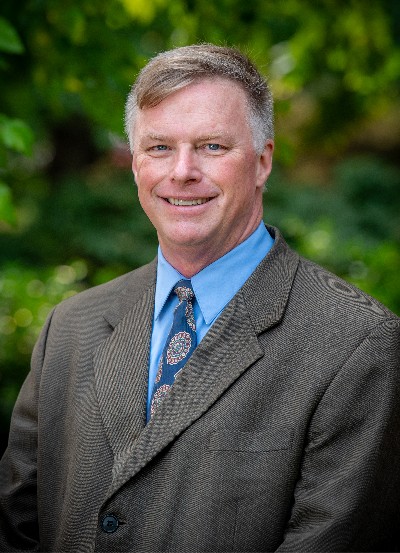
by Dr. Sean Collins

I teach in a college whose students are, on the whole, rather impressive. They are without a doubt well above average in their self-discipline, their desire to learn the truth, and their maturity. I count myself fortunate for this, because as a professor I always hope to find students who are teachable, students who will be able to become, in their turn, the standard-bearers of a culture and civilization which are in many ways in decline. Read More


What Good Exams?

Over the past few years, I have grown more concerned about the negative effects of written exams on our students. In spite of our efforts to promote “learning for its own sake”, and even success in generating engaging discussions from time to time, most of our students seem to approach exams in a slavish or childish spirit. Read More


Law of Reviews

by John Milton Gregory

Let us suppose the process of teaching to be completed. The teacher and the pupils have met and have done their work together. Language freighted with ideas and aided with illustrations has been spoken and understood. Knowledge has been thought into the minds of the pupils, and it lies there in greater or less completeness, to feed thought, to guide and modify conduct, and to form character. What more is needed? The teacher's work seems ended. But difficult work yet remains, perhaps the most difficult. Read More


Events of Interest

Classical Education and the American Experiment: the Declaration of Independence at 250 (February 25 -27):   The symposium's goal is to pursue together an understanding of the American mind. Attendees will examine how classical learning across the curriculum - from science and math to the fine arts, languages, history, philosophy, and literature - shapes the American experiment in republican government and prepares citizens and leaders for the future.

We Hold These Truths: Liberty, Equality, and Core Texts (March 19-22): At this conference, educators, scholars, and students will examine how core texts grapple with freedom’s scope, equality’s demands, and their interplay across time and place. The conference's paper and panel proposal portal is open.

Institute for Catholic Liberal Education’s (ICLE’s) National Conference (July 14 -1 7): This conference inspires and equips a growing community of educators to reclaim the Catholic Church’s full vision of education and to bring it to life in their classrooms. Join hundreds of educators as they come together to deepen their understanding of the nature and purpose of Catholic education and its roots in the liberal arts tradition.


Further Enrichment

The History of Classical Music: Pythagoras through Beethoven: In this brief course, concert pianist and Hillsdale College Distinguished Fellow Hyperion Knight explains how music has developed and what distinguishes the greatest musical achievements through the life of Beethoven. The course includes four lectures, each approximately 30 minutes long, and a 45-minute concert performance.

Physics and the Quadrivium: Most classical schools teach physics just like any other school does. Read this article to learn how Gavin Polhemus, who attended our recent Learnables conference, used the Quadrivium to elevate his school's physics curriculum.

A Midsummer Night’s Dream: Funny Profundity, or Inane and Profane?: In consideration of John Milton Gregory's exhortation to review, listen to this talk on the deeper meaning of one of Shakespeare's comedies.

Comments

Questions, comments, requests, and challenges on any of our material are appreciated. Contact Us

Previous Bulletins

Bulletin Archive

Achievements of our 2025 Fellows

  • Fruits of the Fellows Formation Program
  • A Fellow's Work in Brazil
  • The History of Astronomy: A Project Update
  • The Confessions (An Excerpt)


Leisure

  • Inhabiting Classical Wholes in Music
  • The Transformative Power of Leisure and Literature
  • Leisure the Basis of Culture


The Lord of the Rings

  • Educating for Greatness: The Lord of the Rings as Cultural Epic
  • Friendship, History, and Tradition: Three Criteria for the Development of the Canon
  • Gimli Eulogizes the Glittering Caves


Imagination in the Quadrivium and Literature

  • From a Review of A Brief Quadrivium and Teaching the Quadrivium: A Guide for Instructors
  • Rediscovering Classic Children’s Literature as an Adult
  • Excerpts from Anne of Green Gables


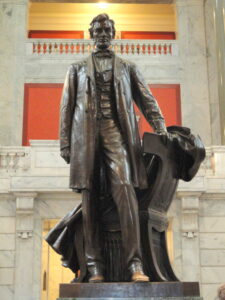
Lincoln and Rhetoric After War

  • Through the Lenses of Rhetoric: A Classical Look at Lincoln's Second Inaugural
  • The Power of Art: Making the Ordinary Romantic
  • Lincoln's Autobiographies


Liberating Literature

  • Teaching Shakespeare to the Young: An Interview with Megan Lindsay
  • Providence and The Lord of the Rings
  • Literary Taste: How to Form It


Teaching For Wisdom

  • Creativity in STEM and Bill McLean
  • The Path Less Traveled: Early Education in the Liberal Arts
  • Einstein's Imagination


Boethius and Politics

  • Introducing the Boethius Institute
  • Machiavelli’s Idealism
  • The Consolation of Philosophy Excerpt


Liberal Education and Literature

  • Only the Lover Sings: The Secret to Teaching Literature
  • On the Liberal Arts in Response to an Article in Principia
  • MacDonald on Effect of Science on an Adolescent


January 2023

  • Interview with the producers of Grammar Revolution, an indie documentary
  • Interview with Shannon Valenzuela, professor of literature and creative fiction writer
  • Miquel Cervantes on creative writing


October 2022

  • Freeing the Mind Through Grammar
  • Grammar and Worship


June 2022

  • The Spirit of Mathematics, on the difference between the classical and modern approaches to the study of mathematics
  • An interview with William Carey, teacher at Ad Fontes Academy


April 2022

  • Preparing the Next Generation for Wisdom: an essay on the study of history
  • An interview with Janice Martinez about her passion for teaching


March 2022 

  • A Dangerous Opinion, on the modern distinction between opinion and fact
  • An interview with Winston Elliott III, the president of the Free Enterprise Institute, founder of "The Imaginative Conservative," and a teacher at Houston Baptist University


January 2022

  • Dr. Seeley’s experience at the Center for Thomas More Studies annual conference
  • An interview with Paul Boyer, an Arizona state senator passionately interested in liberal education